If Your Roof
Leaves dirt rings at end laps after rain
Dirt rings mark where water sits. Silicone tolerates that ponding, and the laps get fabric first.
Start WithSilicone Over Primed Metal
Low-Slope Metal · Flat Roofs
We apply silicone roof coating in Nicholasville on low-slope metal and flat commercial roofs where water sits after rain, starting with an adhesion test.
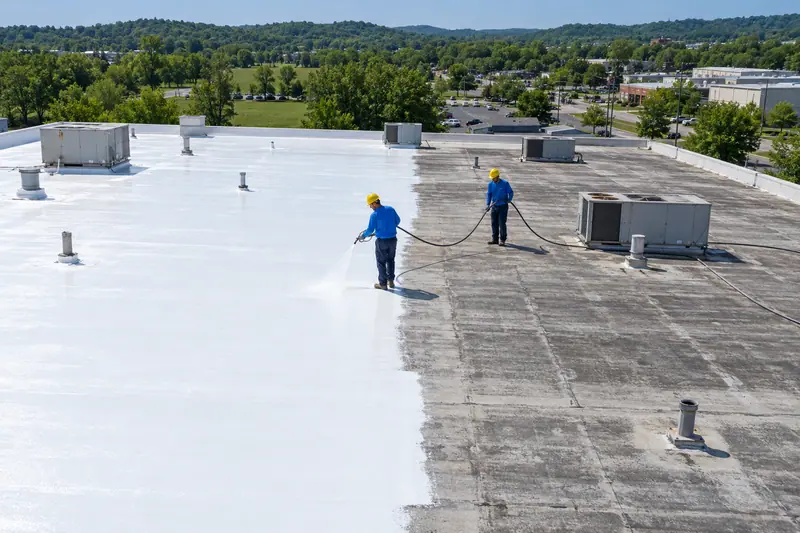
Silicone fits where water stays on the roof. These cards sort the common cases on Nicholasville buildings.
Dirt rings mark where water sits. Silicone tolerates that ponding, and the laps get fabric first.
Silicone bonds to silicone, so a cleaned roof that passes a pull test takes a fresh silicone coat.
Water lingering near drains suits silicone once the drains are cleared and the low area is detailed.
Wet insulation stays wet under a coating. Those areas are cut out and replaced before any silicone goes down.
Low-slope roofs fail where water stays put. These are the spots we check before a silicone job.
Silicone is one of several coatings for low-slope roofs. This table shows where each one fits on Nicholasville buildings.
| System | Ponding | Recoat Path | Best Fit |
|---|---|---|---|
| Silicone | Resists it well | Silicone over silicone | Low-slope metal, end laps, flat sections |
| Acrylic | Softens under it | Bonds to many coatings | Pitched roofs that shed water |
| Spray Foam + Silicone Topcoat | Foam tapered toward drains | Topcoat renewed over the foam | Roofs that also need insulation |
Silicone earns its place on roofs where water lingers. Each pair links a worn spot to what the coating does.
Silicone keeps its film where water sits for days after rain, so the end laps and low spots that wore out the last coating stay sealed.
A silicone membrane keeps stretching at low temperatures, which keeps laps closed through the freeze-and-thaw swings central Kentucky sees each winter.
Bright white silicone reflects sunlight back off the roof, lowering the surface temperature over air-conditioned rooms and stock.
When the coating wears, the roof is cleaned and another silicone coat goes over it, with no tear-off of the earlier layer.
Tell us where it collects and how big the area is. Ponding near drains and at end laps shapes how a silicone job is detailed.
Silicone work centers on dry surfaces and good adhesion. These steps keep both in check.
We probe soft spots for wet insulation, mark where water stands after rain, and run a small pull test on any old coating to see whether new silicone will bond.
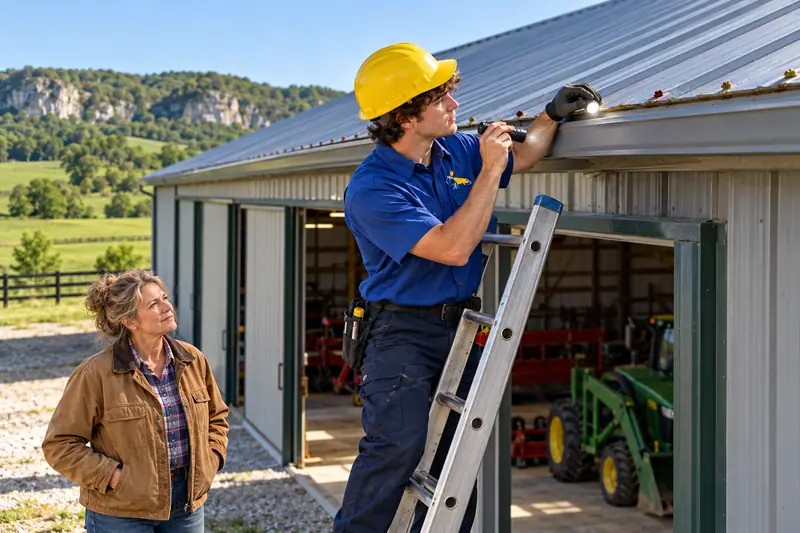
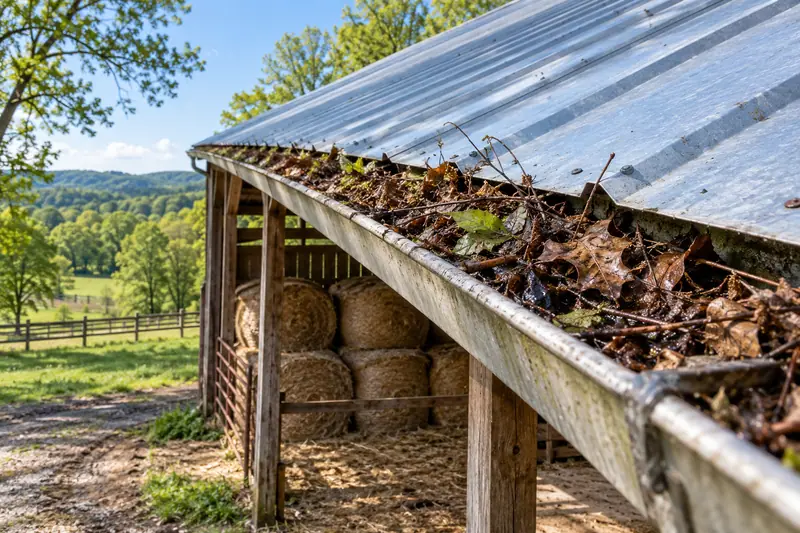
Drains, scuppers, and gutters are cleared so water can leave the roof. The surface is washed to take off dirt, chalk, and the film that collects in ponding areas.
Soft spots with wet insulation are cut out and filled with new material. Coating over trapped water would leave it in place to rot the deck.
A primer matched to the surface goes down where bleed-through or bare metal calls for it. Laps, seams, and curb bases get fabric set in silicone.
Silicone is sprayed or rolled in one or two passes to the specified dry thickness, with extra build at end laps and around drains.
A silicone job often sits next to one of these on the same roof.
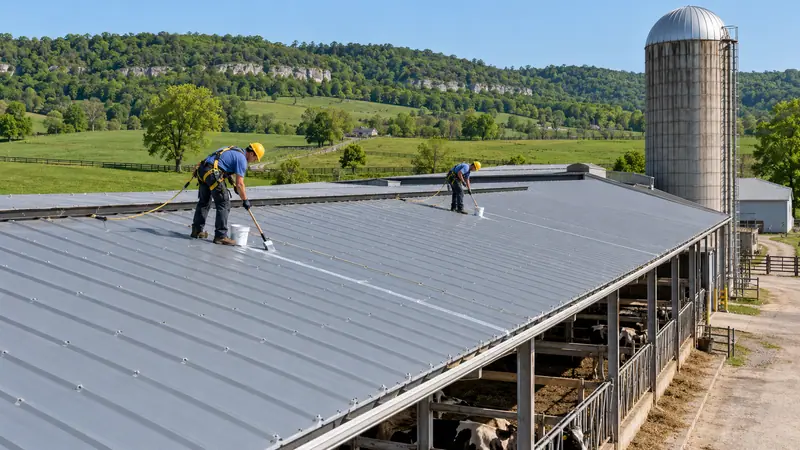
Steel roofs with rust and loose screws get fastener and lap work under any topcoat, silicone included.
Metal roof coating in Nicholasville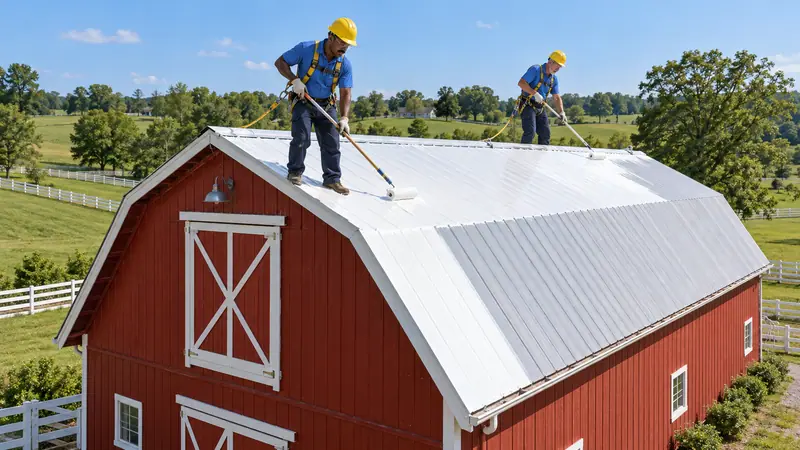
Steeper metal sections that drain quickly do well with acrylic, which picks up less dirt than silicone.
Acrylic roof coating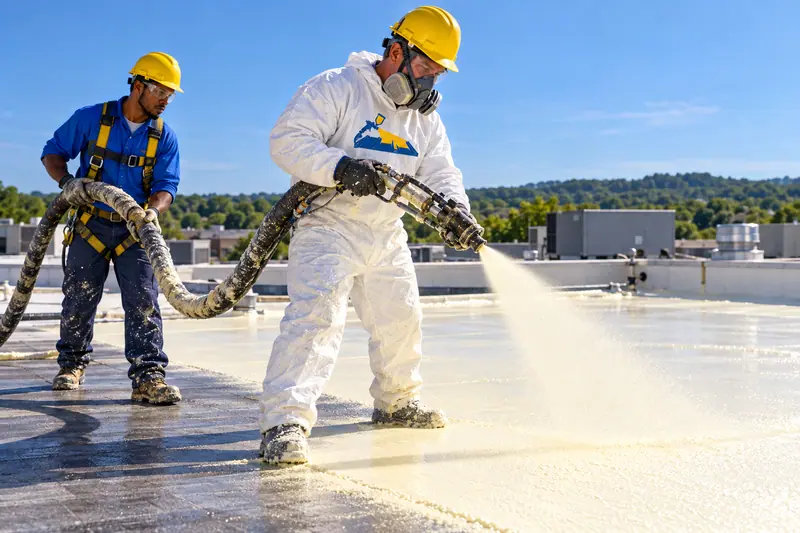
Foam tapered toward drains can remove low spots on flat sections before a silicone topcoat goes over it.
Spray foam roofingWhat owners ask before a silicone job on a Nicholasville roof.
Laps and seams get a reinforced band of polyester fabric or seam tape set in coating before any field coat goes on.
Dried caulk is pulled first and rust at the overlap is primed. On low-slope roofs the end laps carry the most water and movement, so they get the thickest build of silicone.
Silicone wins where water sits; acrylic suits steeper metal that sheds water fast.
Both go on white over primed steel. Silicone collects more dirt over time and takes only silicone recoats, while acrylic stays cleaner and bonds to many coatings. Slope, end lap condition, and rooftop traffic usually decide it.
Yes, once the old coating passes an adhesion test and peeling or blistered areas are removed.
We check for chalk to wash off, blisters around screws and laps, and bare spots worn to rust. The existing type matters most: an old silicone layer accepts new silicone and little else.
Rooftop units, exhaust fans, and electrical runs have to be shut down and protected while silicone goes on near them.
Knowing the utility also tells you who to ask about business energy programs. Around here that can be Blue Grass Energy, Kentucky Utilities, Inter-County Energy, or Jackson Energy, and the electric bill names it.
Wash it. Silicone holds onto dirt more than acrylic does, and a dirty surface reflects less sun.
A gentle wash during routine roof checks brings the white surface back. Keep drains clear while you are up there, since standing water carries silt that settles onto the coating.
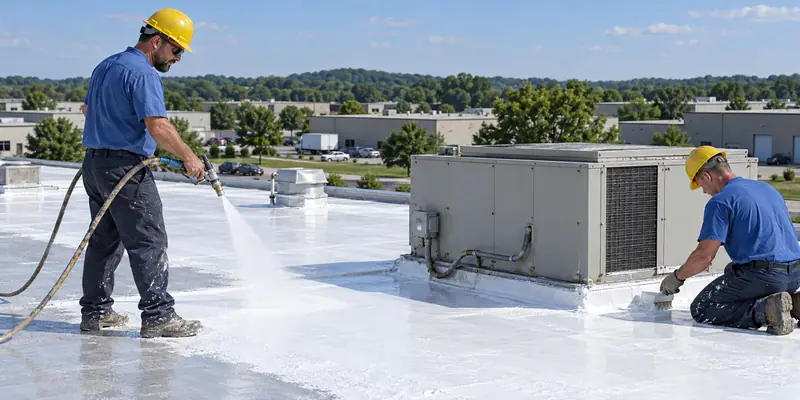
Tell us where water stands on the roof, or call to describe it. We check adhesion and dryness before silicone goes down.
Leave a name and number and we will call you back about the building.
Or call now: (859) 204-8094