If Your Roof
Has white chalky powder on galvanized panels
White rust washes off, and a primer rated for galvanized steel goes on before the field coats.
Start WithWash And Galvanized Primer
R-Panel · Standing Seam · Barns
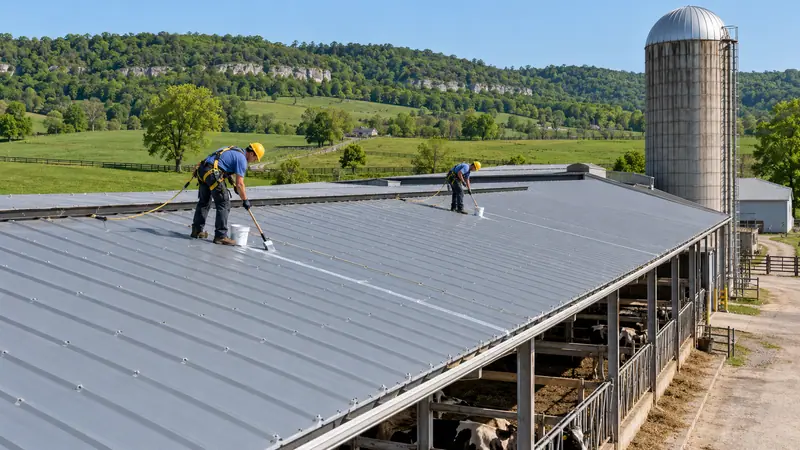
We coat commercial metal roofs in Nicholasville after the screws, laps, and rust are dealt with. R-panel, PBR, and older standing seam all qualify when the steel is firm.
Four common metal roof situations and where each one starts. The last card is the one where coating waits.
White rust washes off, and a primer rated for galvanized steel goes on before the field coats.
Each screw is checked, then tightened or swapped for an oversized one and capped before coating.
Clips stay free to slide, so the coating over seam tops stays flexible while end laps and trim get reinforced.
Perforated steel gets patched with new metal or replaced before anything else happens.
Metal roofs fail at the same handful of places. Each card names one, what it looks like, and what it means for the job.
The coating that goes over steel comes down to slope, end lap condition, and rooftop traffic. These are the systems we install on metal buildings.
| System | Best On | Goes Over | Watch For |
|---|---|---|---|
| Acrylic | Pitched R-panel that drains fast | Primed steel and many older coatings | Softens under standing water |
| Silicone | Low-slope metal and ponding end laps | Primed steel; later recoats stay silicone | Collects dirt over time |
| Spray Foam + Topcoat | Buildings that also need insulation | Clean, dry panels, ribs filled smooth | Overspray near cars and intakes |
Four ways a coating helps a metal roof, each tied to the part of the roof it protects.
Capping each screw with sealant or brush-grade coating closes the most common leak point on an exposed-fastener roof without pulling a single panel.
Polyester fabric bedded in coating carries the joint through daily movement, so long panel runs on low-slope buildings stop leaking at the overlap.
Primer seals the cleaned steel and the coating keeps water off it, so surface rust stops spreading before it eats through the panel.
Work stays on top of the panels, so the floor below keeps running. Roof areas over stored goods can be sealed first.
Tell us roughly how many rows look loose and whether stains show inside. That sets how much fastener time the job needs.
Inspection, prep, and detailing take most of the time on a metal job. The coating itself is the last step.
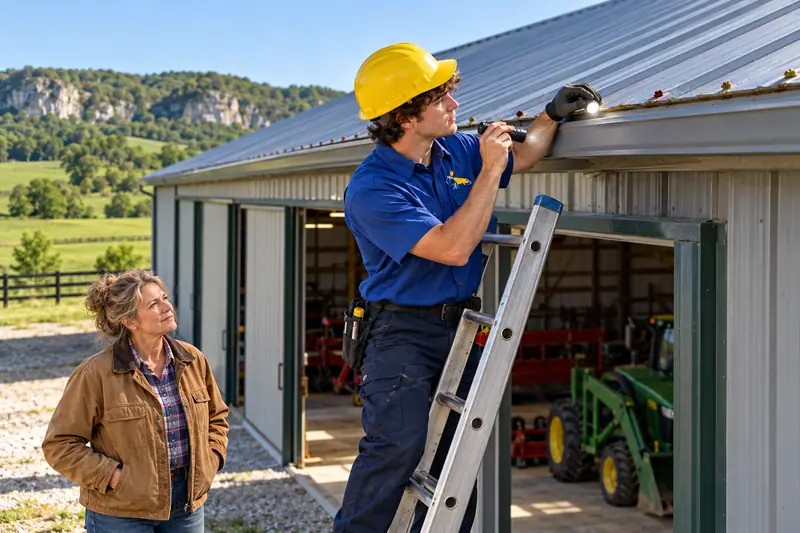
We grade the rust at laps and cut edges, count loose and stripped screws along sample panel runs, and check purlins for sag from below where the building allows access.
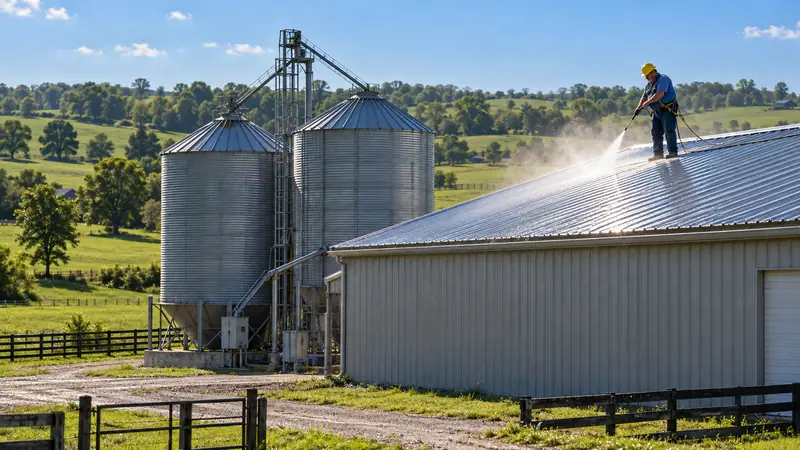
Panels, gutters, and trim are pressure washed with a cleaner matched to the finish. Scale is ground off at laps and screws until bright, firm steel shows.
Loose screws are driven tight, stripped ones are upsized, and every head gets a cap of sealant. On big warehouses this step runs into thousands of fasteners.
Side laps, end laps, ridge caps, and rake and eave trim joints get fabric or seam tape bedded in coating, brushed through until no dry fabric shows.
Rust-inhibiting primer goes on where the finish calls for it, then base and top coats are sprayed or rolled and checked with a film thickness gauge.
Metal buildings often need one of these instead of, or along with, a metal coating.
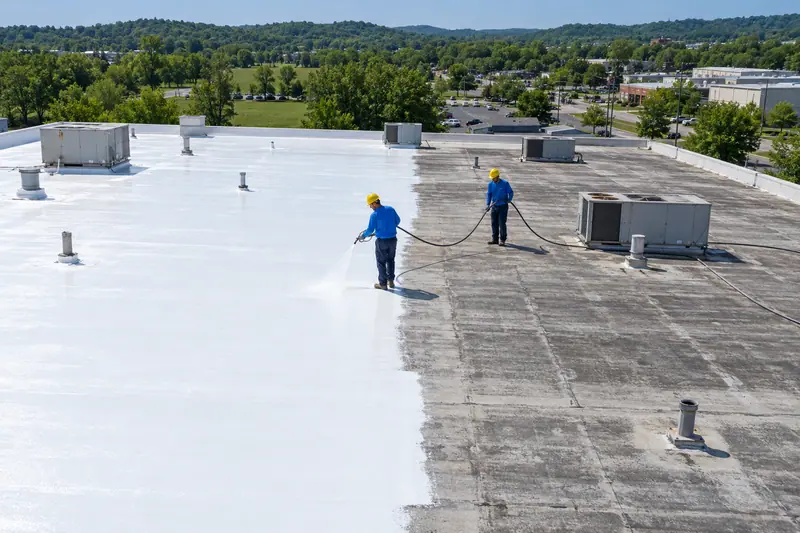
Low-slope metal behind a parapet holds water at end laps, and silicone handles that ponding better than acrylic does.
Silicone roof coating for low-slope metal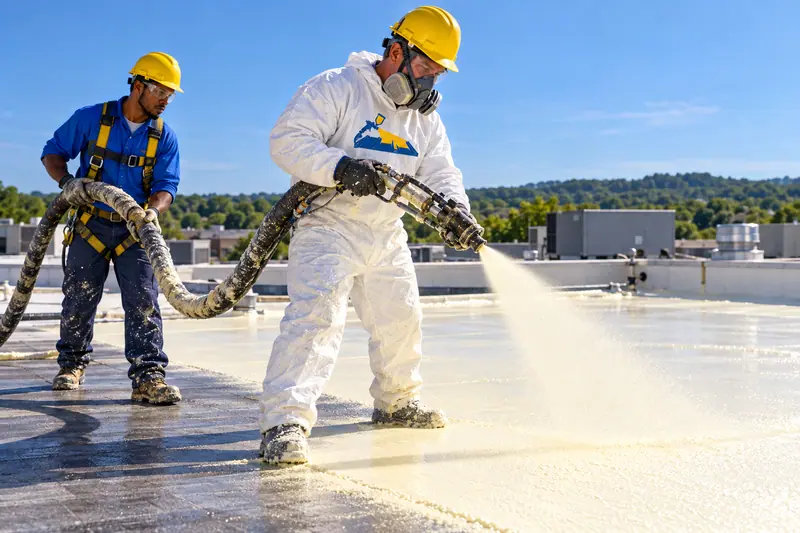
When the building also needs insulation, foam over the panel ribs adds it and creates one continuous surface.
Spray foam over metal roofs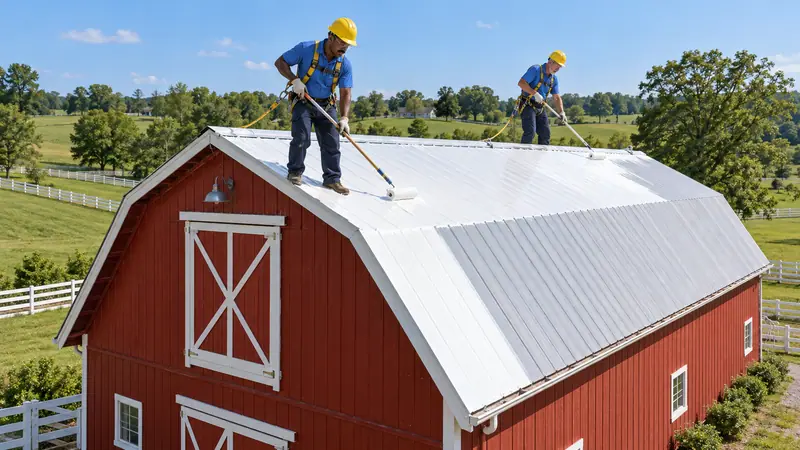
Steeper exposed-fastener roofs that drain quickly take a white acrylic topcoat that stays clean.
Acrylic coating on pitched metal roofsAnswers about metal roofs, written for Nicholasville buildings.
Roofs with surface rust, backed-out screws, and leaking laps make good candidates while the steel underneath keeps its thickness.
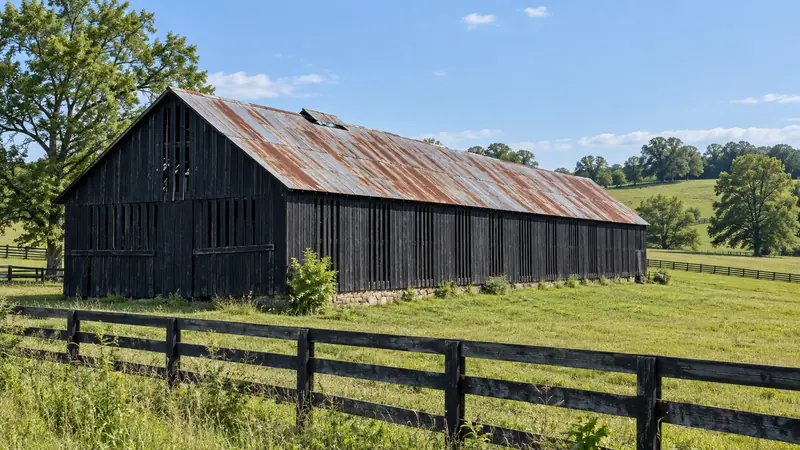
Around Nicholasville that covers R-panel warehouses, older standing seam on churches and offices, chalky barn roofs, and low-slope metal behind strip-center parapets. Holes, sagging purlins, or panels that flex underfoot need structural work first.
Light and moderate rust, yes. White rust is washed and primed for galvanized steel, red rust is brushed and primed, and heavy scale comes off down to firm steel.
Perforation is the line. Pinholes or holes that show daylight get new metal or a replacement panel before coating.
The coating is similar, but the labor lands in different places.
On R-panel and PBR roofs every screw and side lap gets work. Standing seam hides its clips, so attention goes to end laps, ridge, trim, and penetrations, and the coating over seam tops has to stay flexible because those panels slide on their clips.
Washing comes first. A pressure wash with a cleaner matched to the panel finish takes off dirt, chalk, and mildew so primer can bond.
Then come rust scraping at laps and edges, panel and skylight replacements, screw work, and masking of rooftop units. A small adhesion test on cleaned steel confirms the primer will hold before the whole roof is coated.
Timing and weather give it away. Drips on cool, dry mornings point to condensation forming under the panels, while drips during or after rain point to a leak.
We check panel undersides where access allows. Coating the top seals leaks, and condensation needs ventilation or insulation changes inside the building.
Send the roof details through the estimate form or call to describe the building. A roof walk comes before any price is final.
Leave a name and number and we will call you back about the building.
Or call now: (859) 204-8094