If Your Roof
Is pitched R-panel with faded, chalky paint
Chalk washes off, primer goes on rusty spots, and a white acrylic topcoat covers the panels.
Start WithAcrylic Over Primed Steel
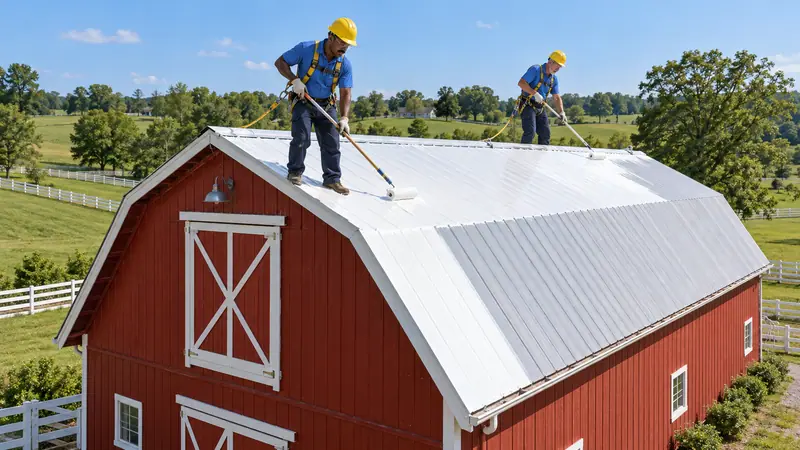
Pitched Metal · White Topcoat
We apply acrylic roof coating in Nicholasville on pitched metal roofs that shed water quickly, scheduled around dew, rain, and cold nights so each coat cures.
Acrylic is a water-based coating that needs slope and dry weather. These cards show when it fits a Nicholasville roof.
Chalk washes off, primer goes on rusty spots, and a white acrylic topcoat covers the panels.
Acrylic adds weather protection and a cooler surface, though utility savings show up mostly under air-conditioned roofs.
Earlier coatings usually accept acrylic once peeling areas are removed and a pull test passes.
Ponding softens acrylic, so that section takes silicone or foam instead.
Pitched metal roofs wear out in predictable places. Here is what we look for before an acrylic job.
Acrylic is one of the coatings we put on Nicholasville metal roofs. Slope and weather decide which one fits.
| System | Slope | Cure Needs | Dirt Pickup |
|---|---|---|---|
| Acrylic | Pitched, drains fast | Dry days and mild nights | Stays cleaner |
| Silicone | Low slope with ponding | Dry surface before coating | Collects more over time |
| Spray Foam + Topcoat | Tapered to drain on flat runs | Dry panels and calm air | Set by the topcoat chosen |
What acrylic does for pitched metal, paired with the wear it answers.
A white acrylic topcoat reflects sun the faded steel absorbed. The DOE rates cool roofs by solar reflectance and thermal emittance, each on a 0 to 1 scale.
Fabric over the laps and capped screw heads under the acrylic close the openings that let rain in on a pitched exposed-fastener roof.
Acrylic adheres to many older coatings once loose areas are scraped and a pull test passes, so a previously coated roof can be coated again.
Worn areas get washed and recoated with acrylic years later, without stripping the roof back to bare steel.
Call and tell us which side of the building spills. Eave gutters and trim get cleaned and checked before any acrylic goes near the edge.
Acrylic jobs hinge on dry steel and a cure window. Each step is planned around the forecast.
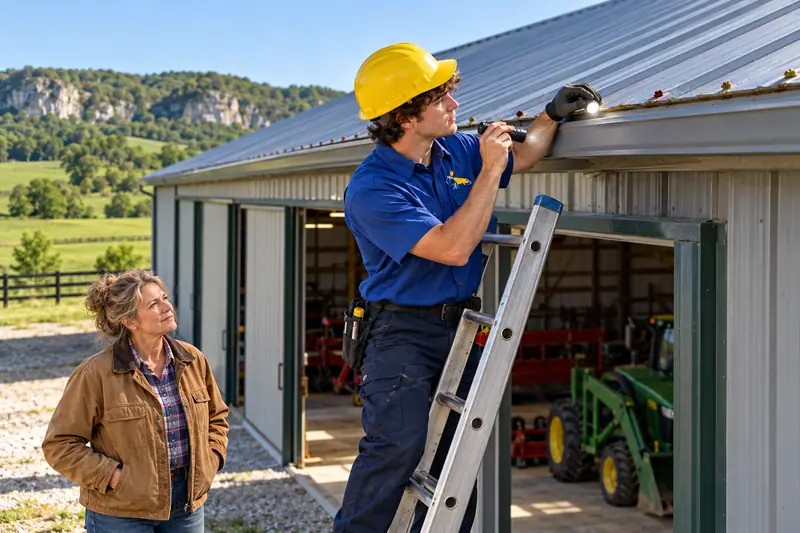
We check paint chalking with a hand wipe, look for loose ridge caps and backed-out screws, test old coatings for adhesion, and note which gutters overflow.
Acrylic needs dry panels and mild nights to cure, so coating days are set for a dry stretch. Steel temperature is checked with a surface thermometer each morning.
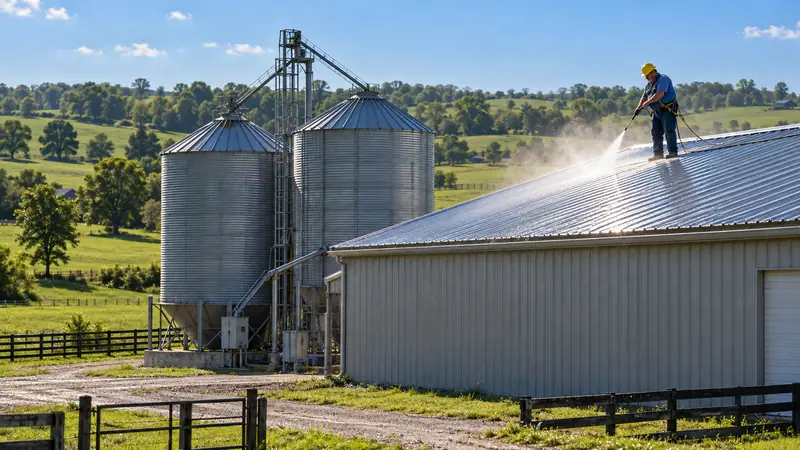
Panels are washed free of chalk and mildew, rust spots are primed, screws are driven or upsized, and ridge caps are re-fastened.
Fabric goes into acrylic along side laps, end laps, and trim joints. Gutters are cleaned so runoff can leave the roof freely.
Rollers work near rooftop units, gutters, and skylights where overspray is a concern, and airless spray covers open panel runs. Two coats build the final thickness.
Some buildings need one of these alongside an acrylic topcoat.
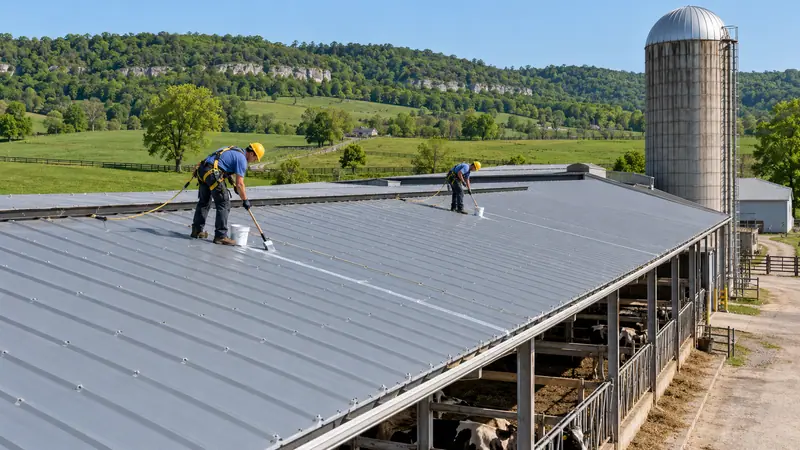
Rust grading and fastener work on R-panel happen before any acrylic topcoat goes on.
Metal roof coating prep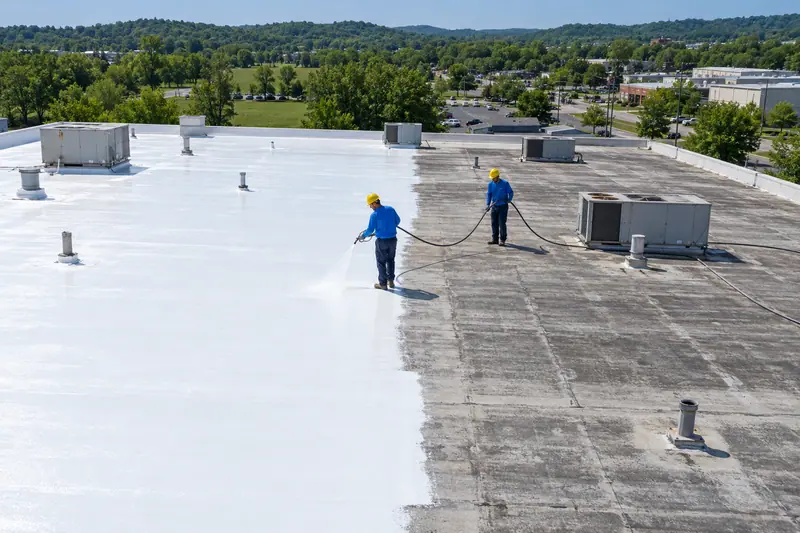
Low-slope sections on the same building, where water lingers, take silicone instead of acrylic.
Silicone for ponding sections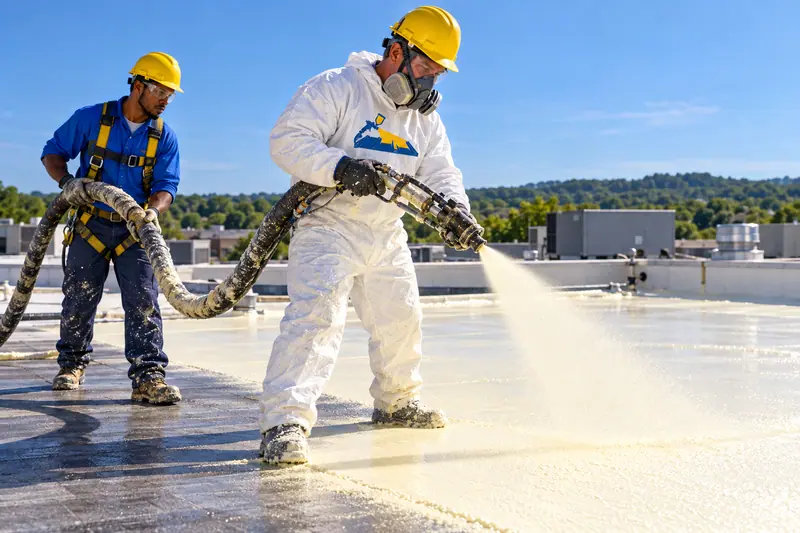
Foam under the topcoat adds insulation to a heated shop and smooths out the panel ribs.
Spray foam roofingQuestions owners ask about acrylic on Nicholasville metal roofs.
Very little weight goes on, since a coating is a thin film instead of new panels or board, and pitched metal keeps draining down its ribs to the gutter.
Two places get a closer look: low-slope runs behind parapets where end laps pond, and gutters packed with rust scale or leaves. Gutters are cleaned, and coating is kept from closing off the drip edge.
A white coating lowers the roof surface temperature by reflecting sun that faded metal absorbed.
Air-conditioned spaces gain the most; unheated barns gain comfort more than utility savings. Washing keeps reflectivity up, and the DOE notes that winter heating needs can rise under a cool roof in mixed climates.
Late spring through early fall gives the steadiest coating weather around Nicholasville.
Acrylic needs dry panels and mild temperatures to cure. Dew, rain in the forecast, and cold nights shorten the working day, and steel temperature gets checked directly because panels can sit far from the air temperature.
Plan around fastener rows, skylight panels, and eave gutters, the three items that shape most warehouse coating jobs here.
Backed-out screws are the main R-panel leak, brittle fiberglass panels get replaced to keep daylight, and rusted gutter seams get repaired. Dock traffic sets the order the roof is coated, and areas over stored inventory get sealed first.
Yes. Tinted acrylic topcoats are made, and some owners pick a color to match trim or a neighboring building.
Darker colors reflect less sun than white, so a tinted roof runs warmer. Ask for the product solar reflectance rating when comparing colors; rated products are listed by the Cool Roof Rating Council.
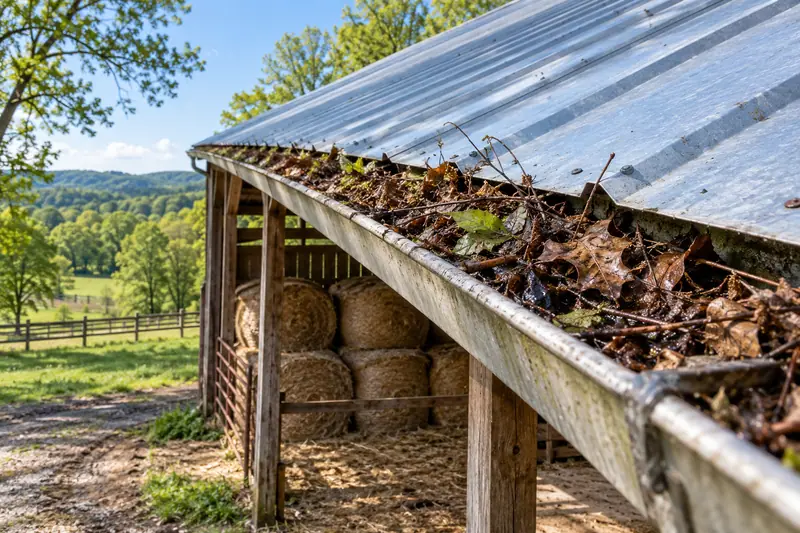
Tell us the roof size and how it drains, or call to talk through the slope. Coating days get booked for dry weather.
Leave a name and number and we will call you back about the building.
Or call now: (859) 204-8094